We Take On the Risk | Corezzle Electronics
Generative Hardware, SiP, Edge AI & IoT Solutions
We Take On the Risk | Corezzle Electronics
We Take On the Risk: The Cost That Shows Up Late in Hardware Projects
The most frustrating property of risk in hardware projects is how late it appears. The schematic is done, the layout is finished, the boards are back from manufacturing. That is precisely when the problem shows up, at the most expensive possible moment. The board does not come up, DDR behaves erratically at certain temperatures, or the device comes back from the EMC lab with a report.
All of these risks share one trait: none of them can be confidently verified at the design desk. They can only be measured once a real board exists. At Corezzle, the work we take on in Nar Series System-in-Package (SiP) products is doing that verification before you, and doing it once.
Where does the risk accumulate?
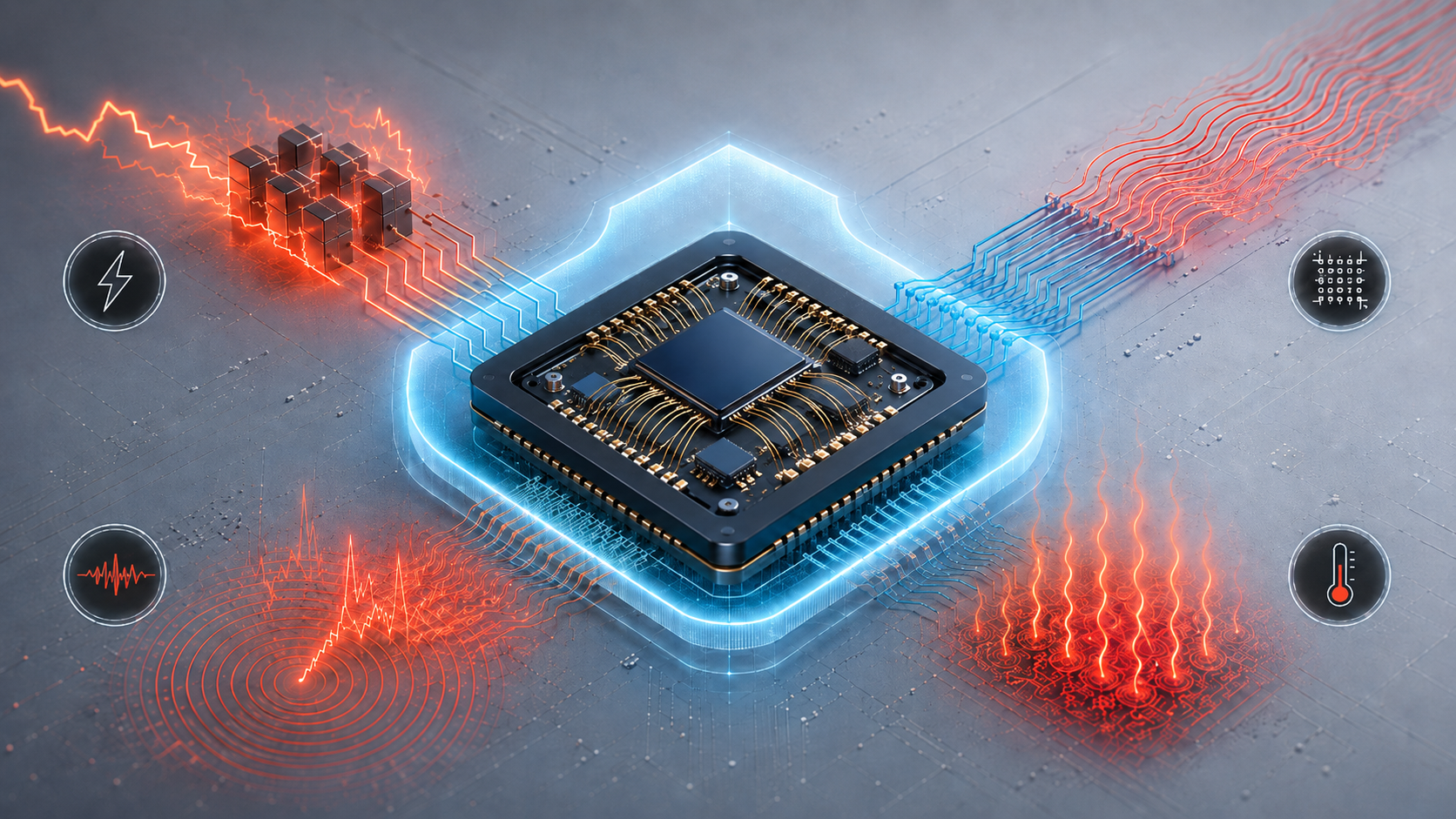
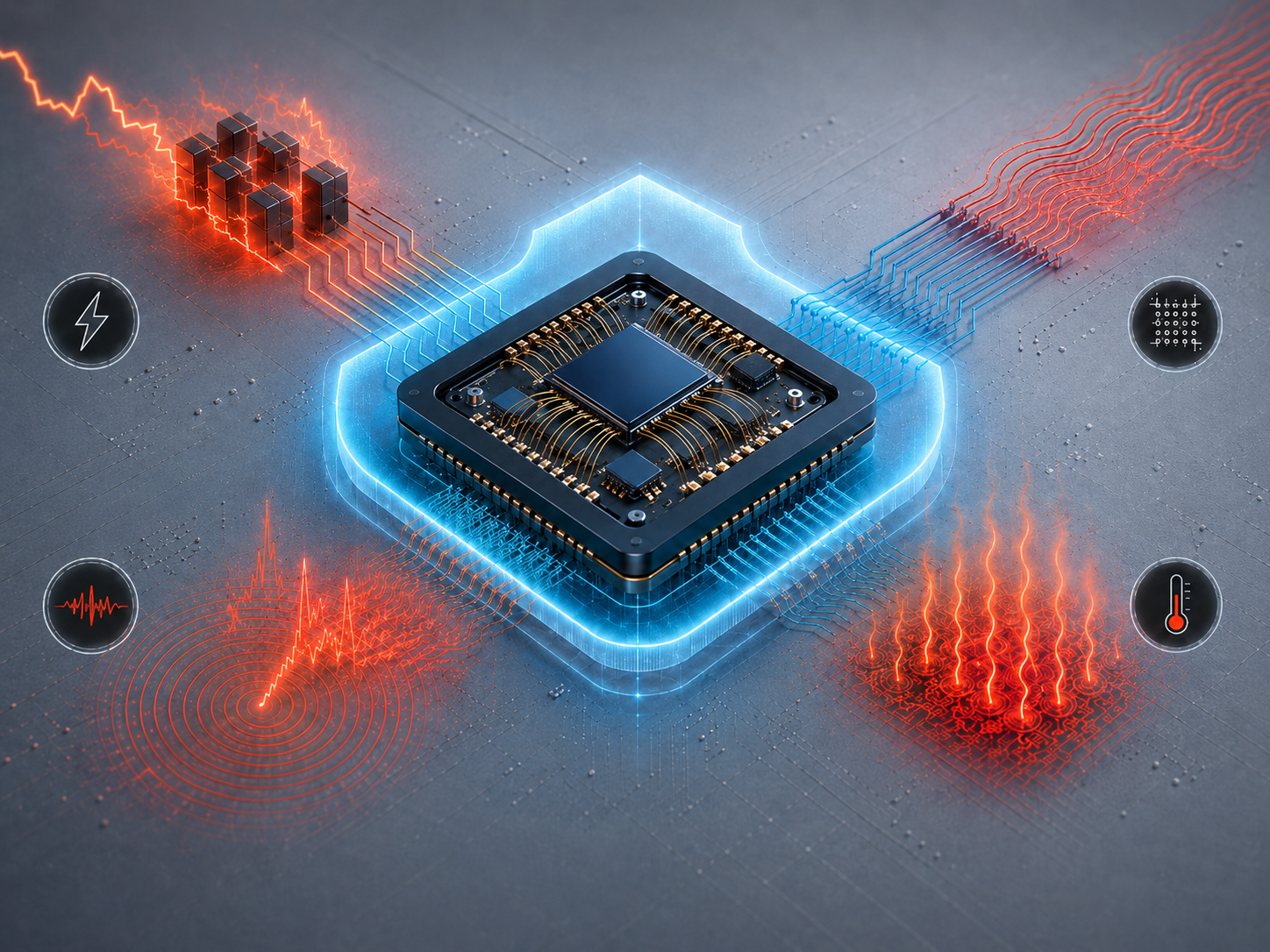
There are four areas where risk concentrates around a processor subsystem.
Power sequencing. The core, I/O and memory rails of a processor have to come up in a specific order and within specific time windows. If the order breaks, the device does not start, and even if it does, its lifetime suffers. The sequence is written in the datasheet, but you only learn that it is correct on your board by measuring it.
The memory interface. In DDR routing, length matching, impedance control and layer planning all have to work together. Mistakes here often do not kill the board outright. They do something worse: the device works on the bench and turns unstable in the field once the temperature moves.
Electromagnetic compatibility. EMI/EMC behaviour is the combined result of placement, stack-up, reference planes and filtering. You cannot know the outcome for certain before entering the lab. A device coming back from EMC testing more than once is considered normal in this industry.
Thermal behaviour. How heat moves from inside the package to the board surface, and how much each component warms its neighbour, appears on the real board. Simulation points the direction, measurement makes the decision.
All four lead to the same place: a redesign, in other words a re-spin. A re-spin looks like a budget line, but you pay its real price on the calendar. While the board is remade, the software team waits, field testing slips and the launch date moves.
We move these risks inside the package
In Nar Series products, the processor, memory, power management, clock source and communication units come together in a single package. That means more than saving space. All four risk areas above move inside the package as well, which means they move onto us.
Power sequencing is solved inside the package. In NAR-ESP32S3R16-32, the AXP2101 PMIC (Power Management IC) manages the entire power-up sequence internally, so no extra sequencing circuit is needed on the integrator side. In NAR-3358, the TPS65217C and TL5209 pair does the same job. You bring a single supply to the board and the rest happens inside the package.
The memory interface is calibrated at the factory. In NAR-3358, DDR3L sits inside the package together with the processor and is calibrated in production. Since there is no DDR bus on your carrier board, you do not carry the routing and EMI risk that comes with it either.
The RF side is set up in advance. In products with wireless connectivity, the RF path, supply separation and reference planes are resolved inside the package. You design the antenna connection and the enclosure.
Manufacturing parameters arrive defined. The moisture sensitivity level of the package (MSL3) and the reflow profile with a 260 °C peak are documented against the IPC/JEDEC J-STD-020E reference. The recommended land pattern is given per IPC-7351B, including stencil thickness and solder paste coverage. Your manufacturing partner does not guess, it reads a document.
What we do to be able to take that risk
Taking on a risk is not a matter of accepting it in words. You need to be able to measure it and verify it repeatably.
At Corezzle, the entire packaging process runs in house. Our capabilities cover single-die packaging, multi-die integration, full SiP packaging, and validation before and after production.
What stays with you
Not all of the risk moves to us, and it would be wrong to claim it does. What stays with you is the carrier board design, the application software, the mechanical enclosure and system level conformity. All of that work, however, is the work that sets your product apart.
In exchange, DDR routing, power sequencing, in-package thermal balance and SiP level validation stay on our side. Your team does not have to spend months on an infrastructure layer that none of your customers will ever notice.
Contact: [email protected]
Featured Posts
Months Turn Into Days | Corezzle Electronics
2026-08-10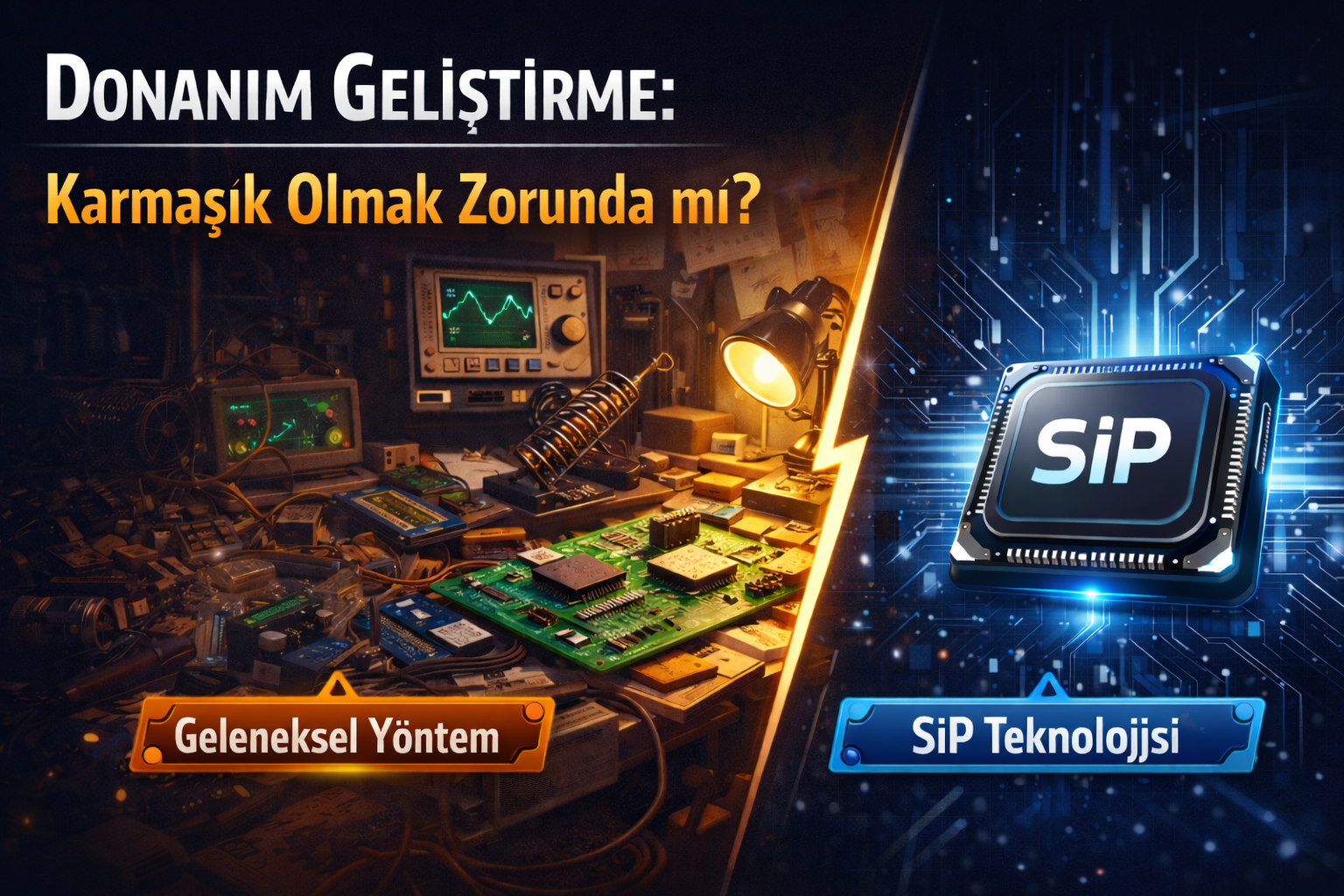
Does Hardware Development Really Have to Be This Complex?
2026-04-08Recently Added Posts
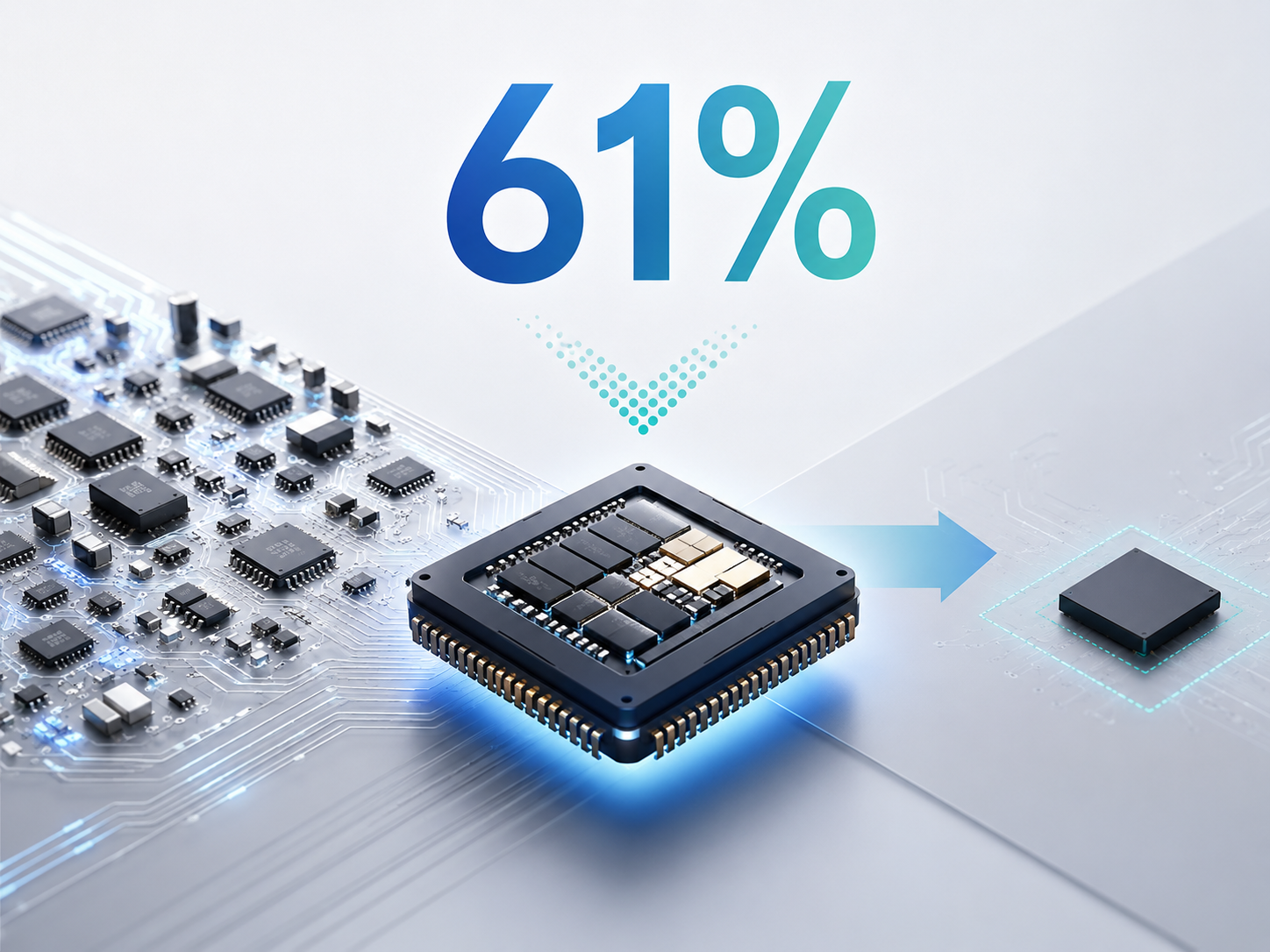
One Package, 61% Smaller | Corezzle Electronics
2026-08-10We Take On the Risk | Corezzle Electronics
2026-08-10